Showing posts with label Book Nook. Show all posts

Friday, July 17, 2009

Book Nook - Personal History

Personal History
By: Katharine Graham

What’s this book all about?
It’s the autobiography of Katharine Graham, the woman who ran the Washington Post, and during the Nixon years oversaw the Watergate coverage which later lead to his resignation. She won a Pulitzer for the book in 1998.

Why did you purchase this book?
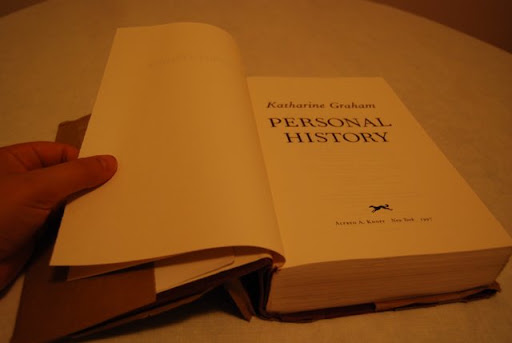
I didn’t purchase it at all. A friend loaned it to me, saying that “since you like to read biographies, you’ll LOVE this!”… she gave it to me without a dust jacket, hence my fancy wrapping!

Who was your favorite character/person in this book?
Oh man… where do I start? Katharine Graham is a pretty remarkable woman… but I would have to go with Ben Bradlee or her mother Agnes Ernst Meyer.

Was there a certain point in the story when you wished the book would never end?
Pretty much the whole time! This woman led a fascinating, yet difficult, life. A few times I was a little incredulous at her opportunities and encounters (Truman Capote threw her a ball in NYC), but she had no problem sharing her mistakes and inadequacies, which was refreshing.

What’s a really great quote you came across in reading this book?
“I suppose Mother has told you that we met Einstein. He was simply grand! His hair is positively a nest and he had on a bright blue sort of “over all” suite, and a pipe in his hand. His wife won’t let him smoke cigars… Their house is very plain but awfully pretty- near a lake. He sails a boat along. It’s built with a very flat bottom so it won’t tip over when he gets absent minded. When people see his boat running around in circles they know that a new theory is being formed.” Katharine wrote this in a letter to her father at the age of 11; she and her mother had been visiting Europe and spent the day with Einstein and his wife.

If you were promoting this book, what would you use as the key selling points?
Katharine Graham led an incredibly interesting life- she was friends with presidents, literary greats, leaders in the business world, and more. She shares her insights, bother personal and professional, in a very honest way.

Would you recommend this book to others?
Definitely! I didn’t know much (if anything) about her prior to opening the book, so I was enthralled the whole time. The only downside? The book is quite long and weighed a lot as I schlepped it around.

This is what the book looked like as I read it on the subway... some of my friends thought I was reading Twilight and was embarrassed about it! :)
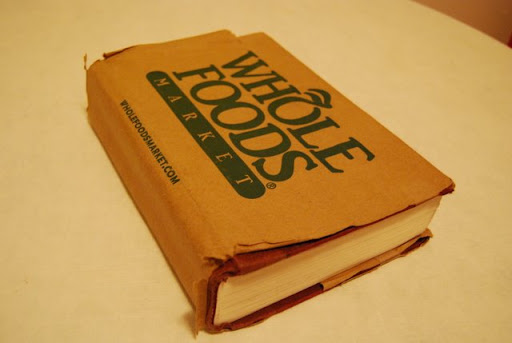
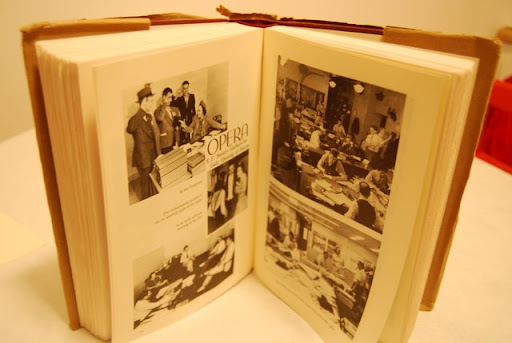
I swear, I really do read books without pictures in them!
Friday, July 10, 2009

Book Nook - DEBUT

After a request and a little encouragement, I have decided to write my first book review. I’m not claiming to be a great literary mind; but thanks to the fantastic NYC subway system and my daily commute, I find myself devouring novels. So- we’ll see how this first one goes- feel free to let me know your opinion in the comments section!
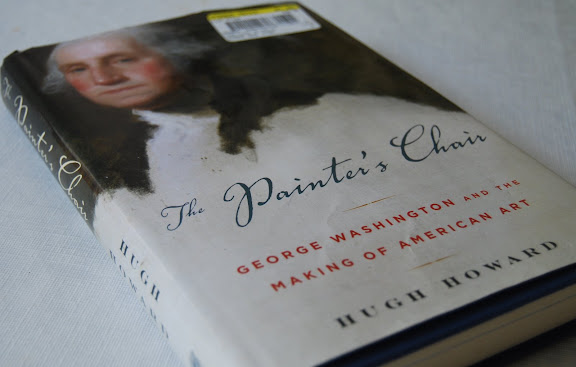
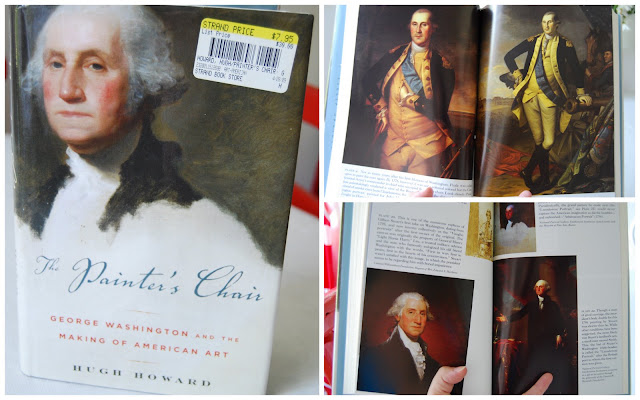
The Painter’s Chair: George Washington and the Making of American Art
By: Hugh Howard


What’s this book all about?
As America was being founded, there were hardly any portrait artists in The New World. This book follows the lives of the founding fathers of American art, by comparing their interactions with their most famous subject: George Washington. Howard examines the life of a handful of artists and offers a unique critique of their Washington portraits.

Why did you purchase this book?
I found it at Strand, a wonderful used book store near Union Square. I had stopped by to restock on reading material, and this one caught my eye. I think books about the founding of American (and the key players) are really interesting. Plus- it was only $7.95 for a hardcover!

Who was your favorite character/person in this book?
Oh- that’s a tough choice. All the artist profiles are fascinating, but I think Benjamin West deserves a special mention. Though he was born in Pennsylvania, he left in 1760 (at the age of 21) to study in Italy. He was determined to return to America after his studies were finished, but his skills were in great demand in Europe. He settled in London, and eventually became the historical painter to the court of King George III and the president of the Royal Academy of Arts. But most importantly, he had an open door policy for any aspiring artist from America. As a protégé wrote, “[West] had no secrets or mysteries. He told all he knew… every American was a brother to him, and his open doors and open heart ever received them as such.” West hosted such noted artists as Charles Wilson Peale, Rembrandt Peale, Gilbert Stuart, John Trumbull and Thomas Sully (who are all profiled in this novel). Since he was a major part of each of these artists’ lives’, he pops up a number of times in this novel, and makes a lasting impact on each one of his pupils.

Was there a certain point in the story when you wished the book would never end?
I liked reading about Washington’s not-so-secret disdain for portrait sitting. He obviously sat for many portraits, and he would write to others about how much he disliked the process. Plus, I learned so much about the materials used in those original portraits. Artists would have to mix their own paint (using pigments and oil), and they utilized a special "portrait chair". It was a special chair that was attached to a lazy-susan type of spinner, so the subject could be spun in any direction and the artist could look at different angles without having to move.

What’s a really great quote you came across in reading this book?
“On conversing with [Houdon], Dr. Franklin and myself became satisfied that no statue could be executed so as to obtain the approbation of those to whom the figure of the original is known… Statues are always condemned by those who know him for want of resemblance.” Jefferson was trying to convince the Virginia delegation that the sculptor he recommended from France (Jean-Antoine Houdon) would need to travel to American to sculpt Washington from life, rather than sculpt from a portrait.

If you were promoting this book, what would you use as the key selling points?
I found the explanations of each portrait to be fascinating… and there are copies of the portraits in the center of the book- so you can see what Howard is talking about. Plus, how often do multiple artists paint the same person? It's fun to see different interpretations of the same man.

Would you recommend this book to others?
Absolutely! I had never thought about the first American artists, so this novel was educational and helped me to appreciate some portraits I’ve been so lucky to see in person!