After a blogging break last week (thank you to everyone who left such thoughtful comments), I'm back with a vengeance. And would you believe that I
still have more pictures of Michigan to share? Well, I do... and today I wanted to share some shots of my family's trip to Fayette.
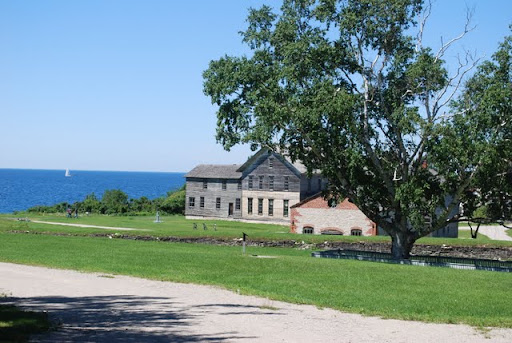
As a travel website explains:
In the mid-1800s, iron ore was shipped from the Upper Peninsula mines to the foundries in the lower Great Lakes at an enormous cost. This high cost of shipping was caused by inefficient transportation combined with the nearly 40 percent waste the ore contained. The solution was to build a blast furnace close to the mine where the ore could be smelted into pig iron before it was shipped to the steel-making centers. The town had to be relatively close to the Escanaba ore docks, have a natural harbor, and be near the limestone and hardwood forests that were needed to smelt the iron ore. Fayette was once one of the Upper Peninsula's most productive iron-smelting operations. Located on the Garden Peninsula at Snail Shell Harbor, Fayette grew up around two blast furnaces, a large dock and several charcoal kilns after the Civil War. Nearly five hundred residents, many immigrating from Canada, the British Isles and northern Europe, lived in and near the town that existed to make pig iron. Fayette was in operation from 1867 to 1891. When the charcoal iron market began to decline, the smelting company at Fayette was closed. As with other company towns, residents began to leave and Fayette is now a ghost town.
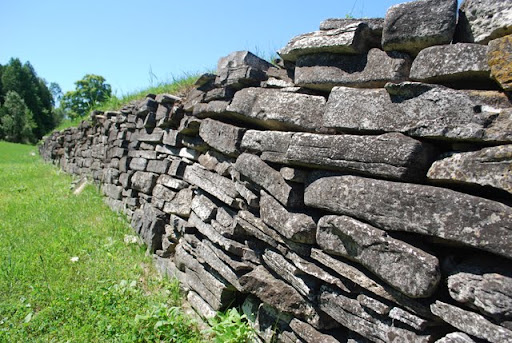
Fayette is now a State Park, which includes original structures, ruins, and restored buildings.
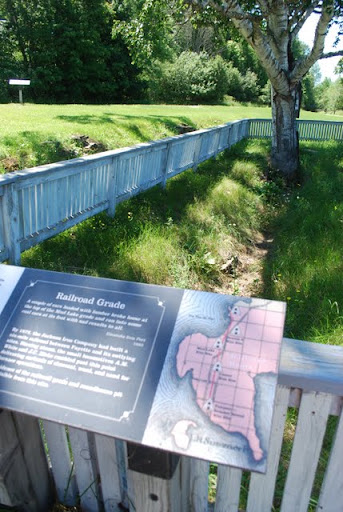
I've always enjoyed visiting Fayette- not only because it's a beautiful location, but because it's a fascinating outdoor museum.
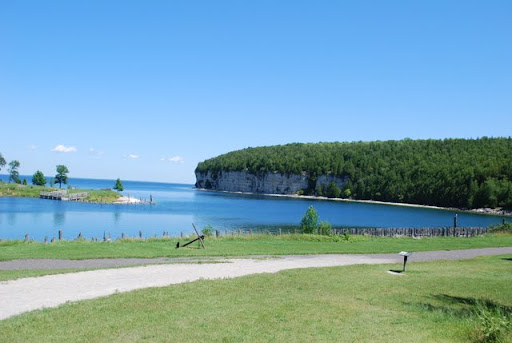
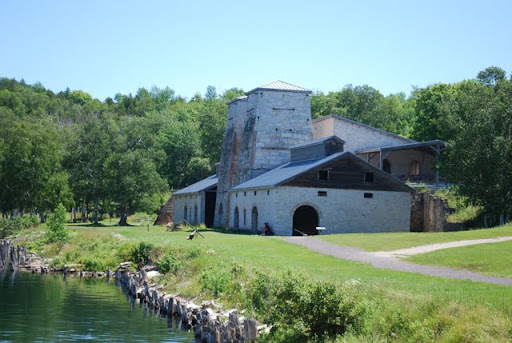
Our first stop on arriving to the park was the original smelting plant.
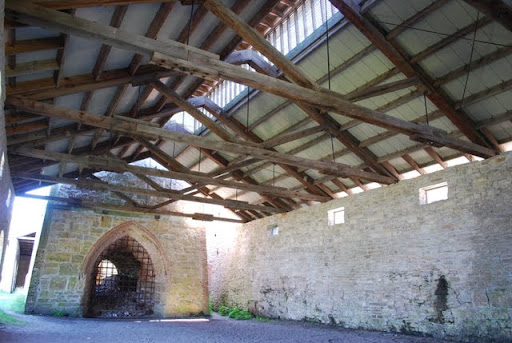
The whole thing in intact, including both the furnace stacks.
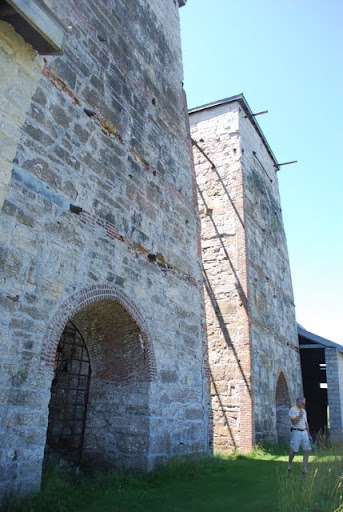
The stacks are even filled with the slag remnants of their last loads... how cool is that?
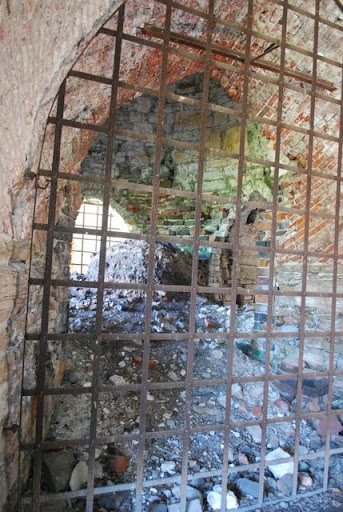
This building was integral to the town- iron ore was crushed and mixed with measured amounts of charcoal and limestone, and lifted by steam powered hoists to the top of the furnace where it was dumped into the stacks. Inside the furnace the charcoal burned, fed by forced air heated in the blast ovens. As the ore melted, its impurities combined chemically with the limestone flux and floated to the top of the molten iron. The waste (slag) was skimmed off the surface and removed. The molten iron was drained through a taphole into the channels of the sand floor of the casting rooms where it cooled and hardened into bars (pigs) and was removed by laborers.
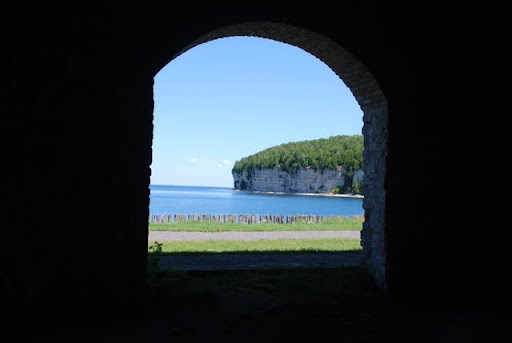
Next to the smelting plant was a surviving charcoal kiln, along with the remains of several others.
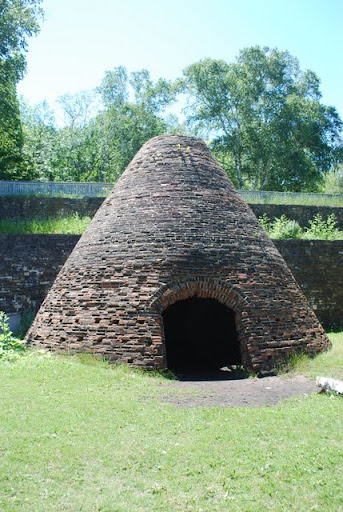
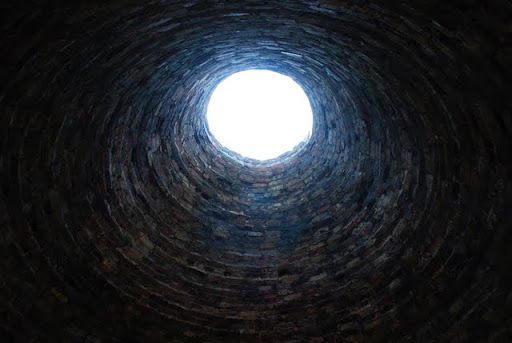
I couldn't help but walk into it... the way the bricks were put together looked really cool!
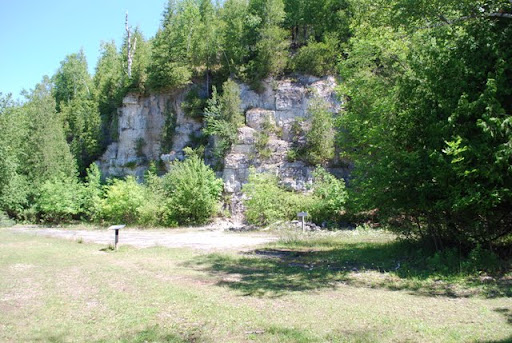
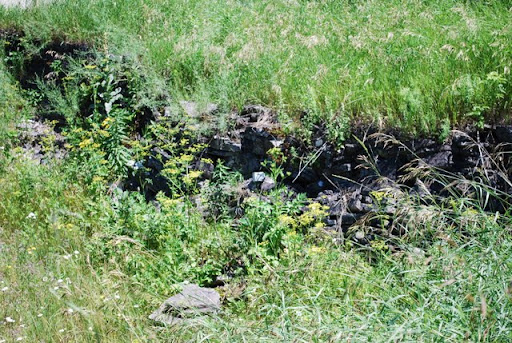
Further down the path was the limestone quarry...
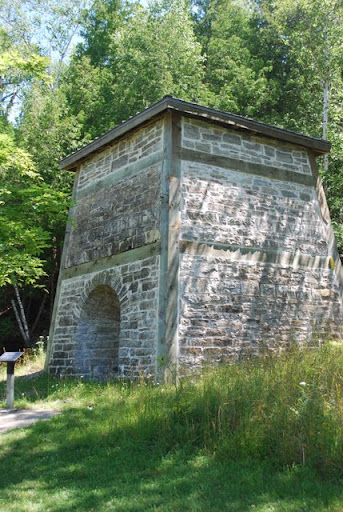
Along with the limestone kiln. See how every part of the smelting process could be found within 100 yards? No wonder this town was so lucrative in its hay day!
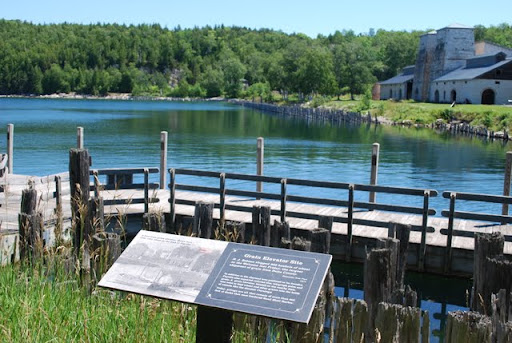
I really liked hanging out on the water's edge.
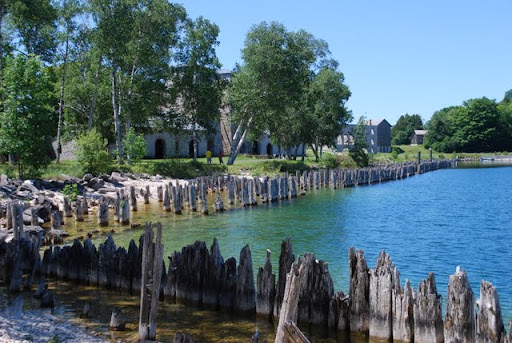
Isn't it beautiful?
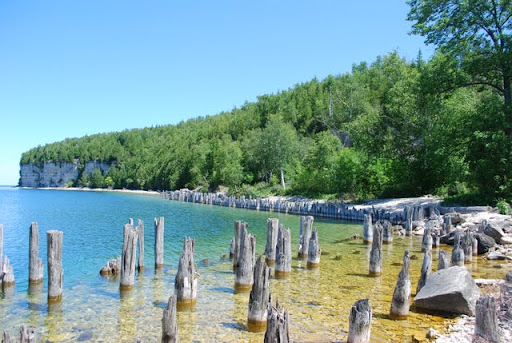
In addition to loads of leftover limestone, the beach was littered with pieces of slag... these chunks of junk have been lying there for almost 120 years!
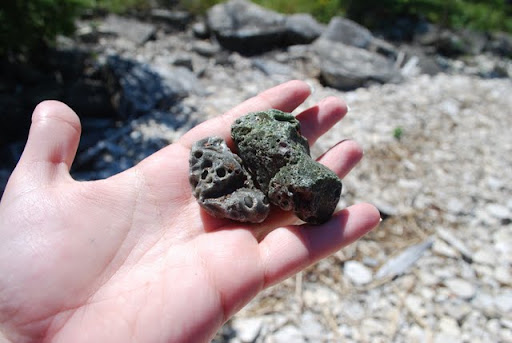
I think that's pretty cool!
Of course the town has a lot more to offer than just the smelting plant... so we headed to the 'wealthy' part of town, up on the bluff.
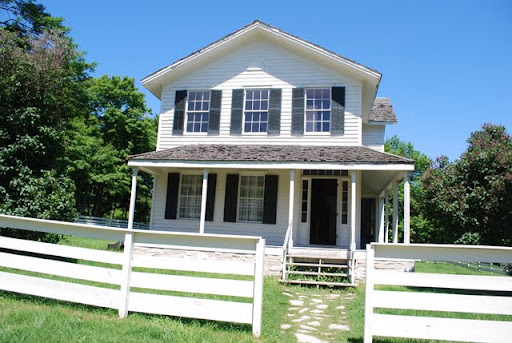
The first house we visited was the Manager's house.
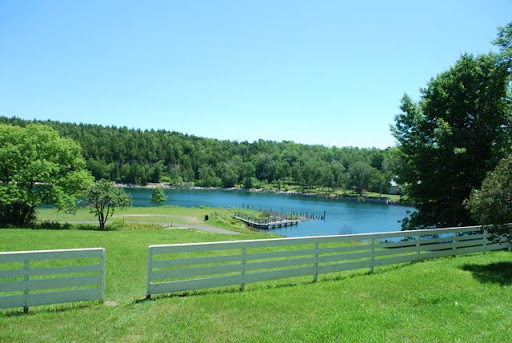
He was one of the more prominent residents of the town, hence this beautiful view from his living room.
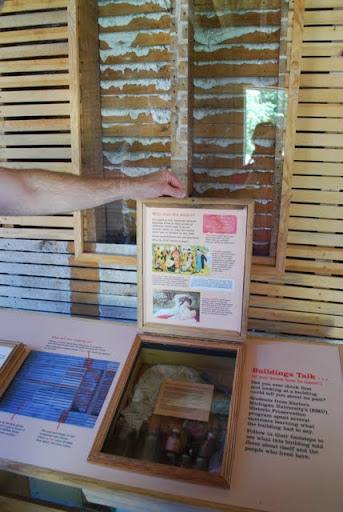
And while some houses have been completely restored, others are still in the process. This house was actual a class project for students earning their masters in the Historic Preservation Program at Eastern Michigan University.
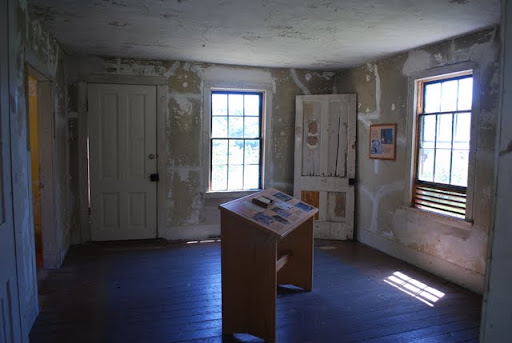
As they worked on this particular house, they came across quite a discovery. Hidden in the wall were 19 empty bottles of drugs... apparently one of the previous tenants was an addict.
We continued on our walk into town, pass numerous ruins...
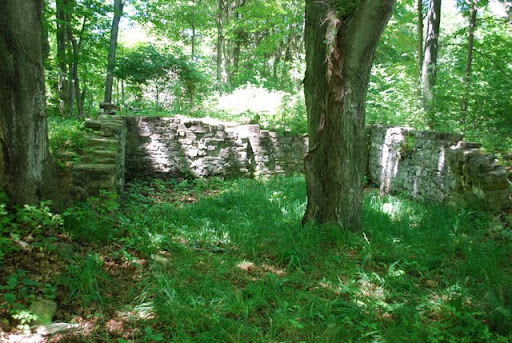
Some of the foundations have really held up well!
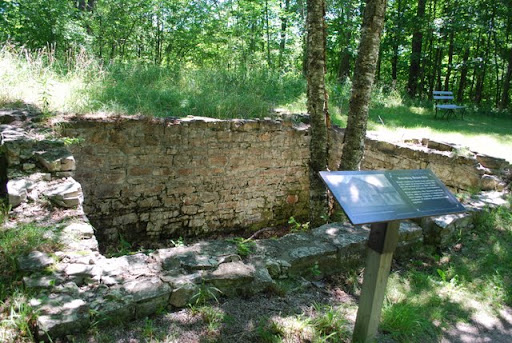
The next part of town was the middle-class neighborhood.
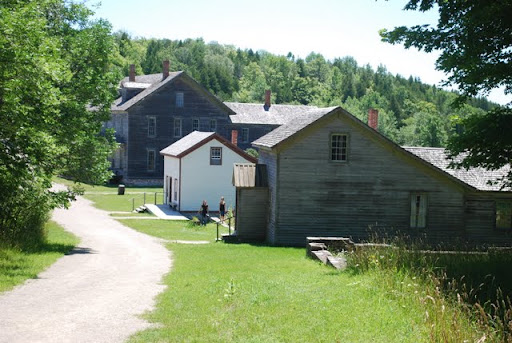
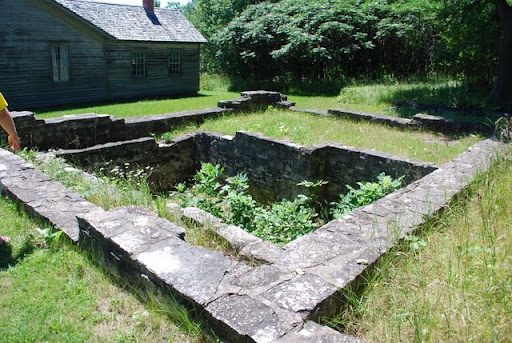
I couldn't help but notice that some of the foundations looked a tad small... I don't think I would enjoy living in a house this size!
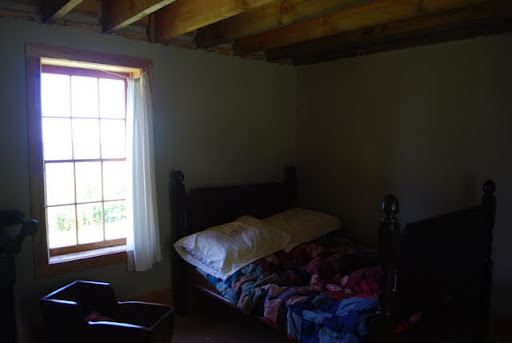
Even if it did look extra pretty inside!
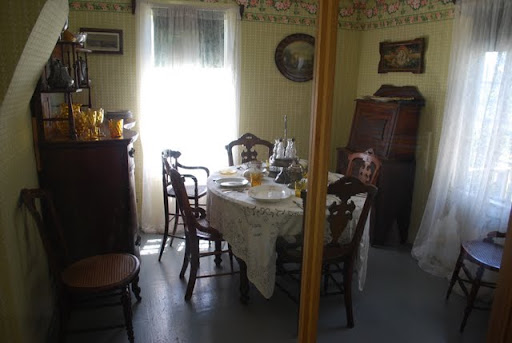
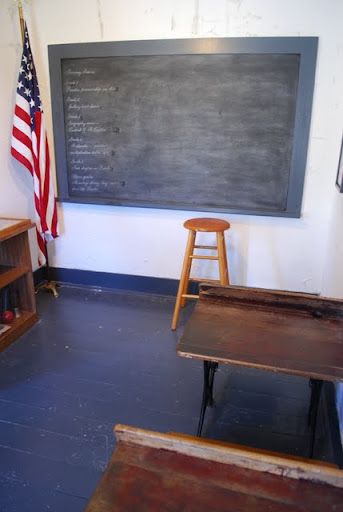
As a company town, every aspect of life had to be accounted for- from school...
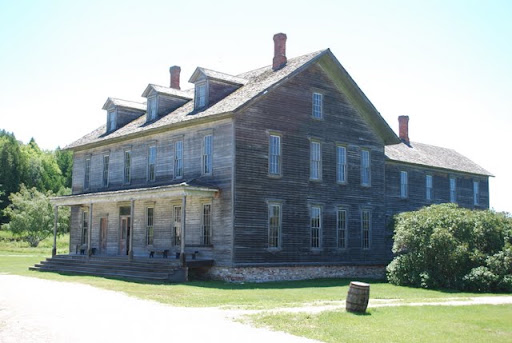
To visitors (that's the town's hotel)...
To entertainment!
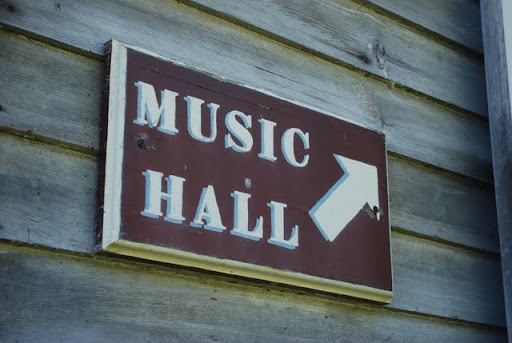
That's right- there was a performance space in Fayette- isn't it cute?
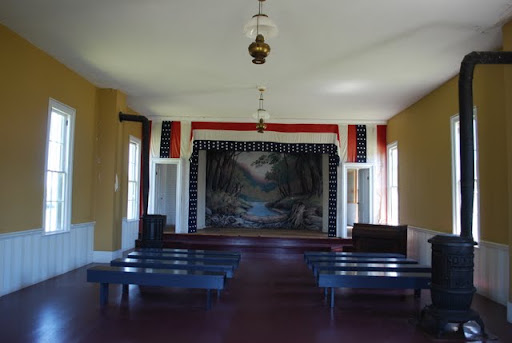
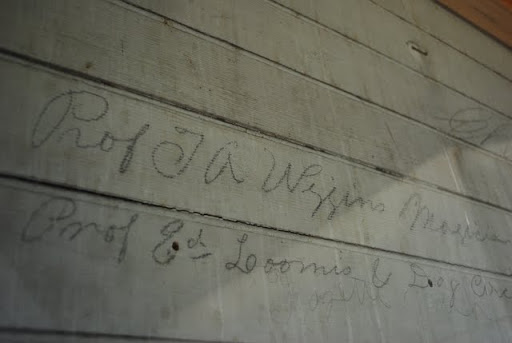
Some of the biggest names of the time played the hall, and signed their names backstage.
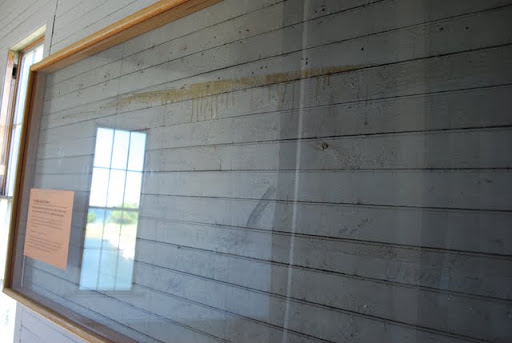
Like Professor Ed Loomis and his Dog Circus!
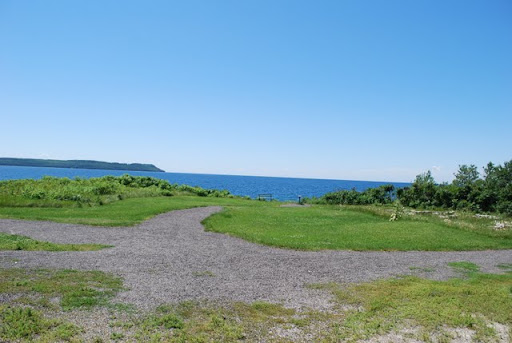
Nowadays the other side of the peninsula looks quite beautiful- but when the town was bustling this is where everyone threw their garbage... gross, right?
Just outside of town was the working class neighborhood. About 30 cabins were constructed to house unskilled laborers and their families...
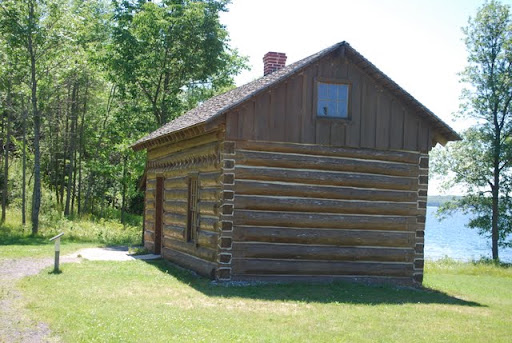
Definitely not the nicest place in town!
We spent a wonderful afternoon wandering through buildings and ruins- most of which didn't even make it into this post! If you like ghost towns, or historical villages, Fayette should really be on your short list!
Thank you for visiting- I hope you had a wonderful weekend!
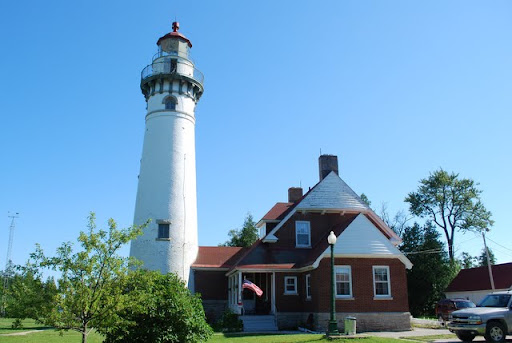 Once, when French fur traders were travelling in canoes across the rough waters of Lake Michigan, they were caught in a storm which forced them to seek shelter. They landed on the a harbor and found refuge in the bay while waiting out the storm. Before leaving, they named the harbor Seul Choix, which means "Only Choice."
 The Great Lakes were dangerous to travel, especially since there was no light for a 100 miles between the Straits of Mackinac and the Garden Peninsula. In August 1886, Congress voted to build a lighthouse and fog signal building on Seul Choix Point. The entire complex was completed in 1895.
 Since the light had to be lit manually, a light keeper was needed to constantly check the light. The compound consisted of a family quarter, a steam fog signal and boiler house, stable, boathouse, two docks, two oil houses, brick outhouse, paint shed and a tramway, which was used to transport supplies from the boats up the slope to the light.
 In 1996 the keeper's quarters were converted to a museum by the Gulliver Historical Society, who operate tours and maintain the structures.
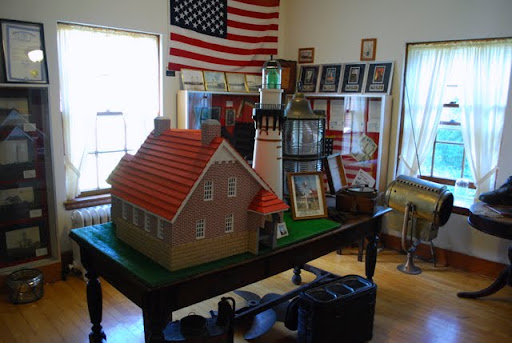
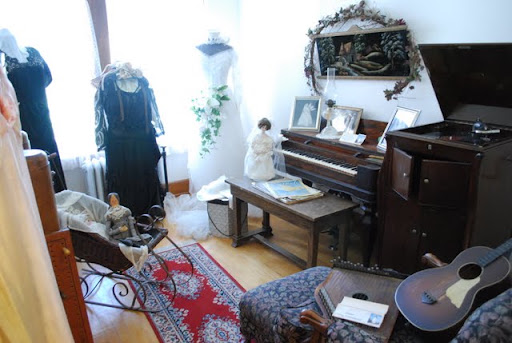
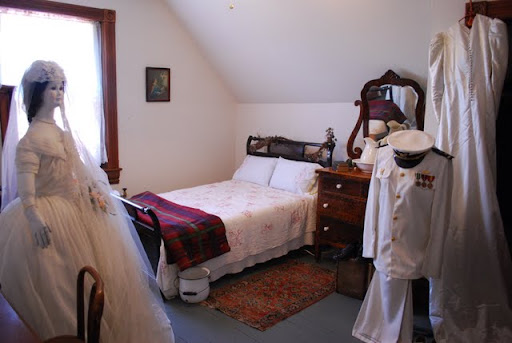
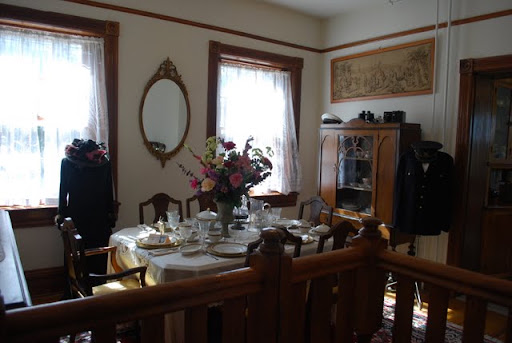 The rooms of the keeper's quarters have been decorated as they would have appeared in the 1900-1930 period.
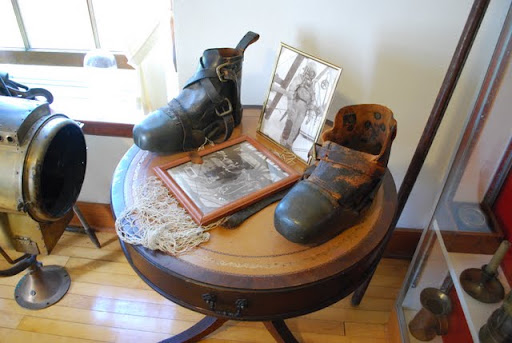
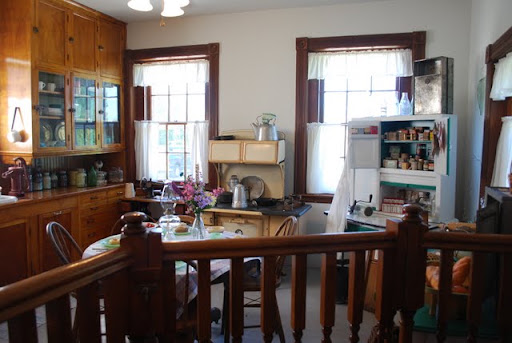 The rooms also include antiques, mementos, and artifacts from the ancestors of local residents.
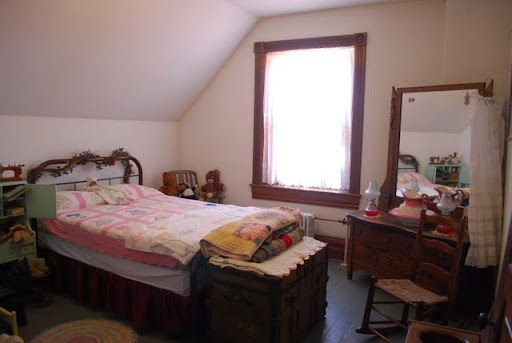 There was a lot to look at...
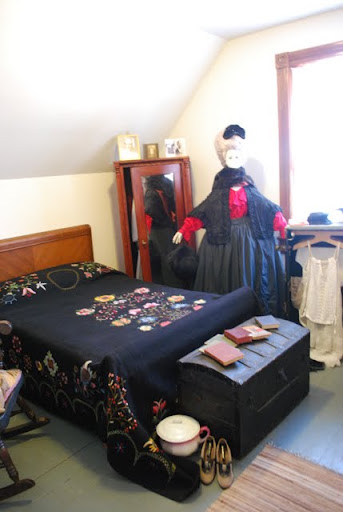 Even if the mannequins scared me a bit!
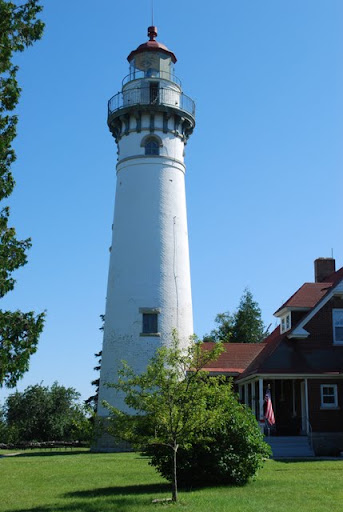
 Of course my main reason for visiting the light was the tower.
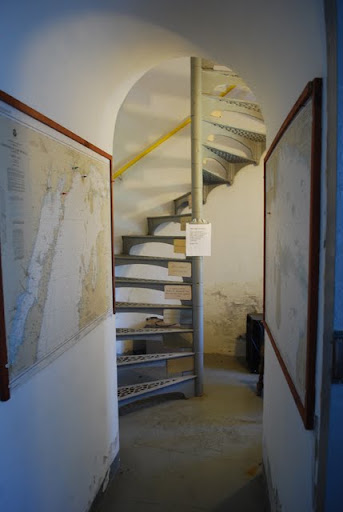 And just over 90 steps later...
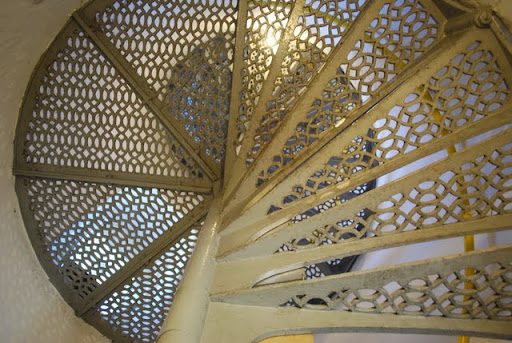 We had made it to the top!
 The ten-sided cast iron lantern room once held a Third Order Fresnel lens, made by LaPaute of Paris.
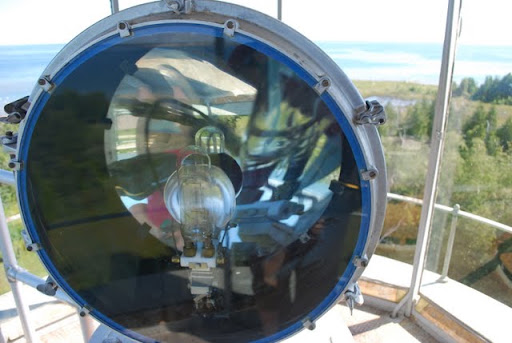
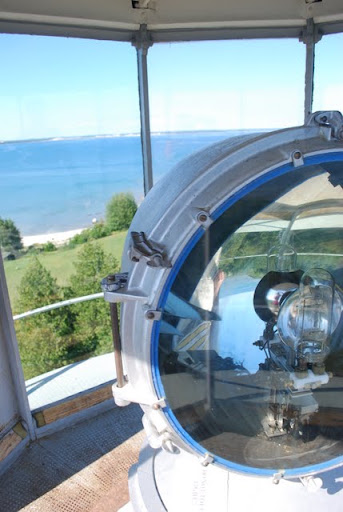 The light that replaced the lens 1972 and rotates... during the day no less! The tower currently houses a fully automated airport beacon lens which allows the light to be seen 17 miles into Lake Michigan. As you can imagine the lantern room was pretty small with such a large light spinning around- I was nervous that I would accidentally trip and fall into it!
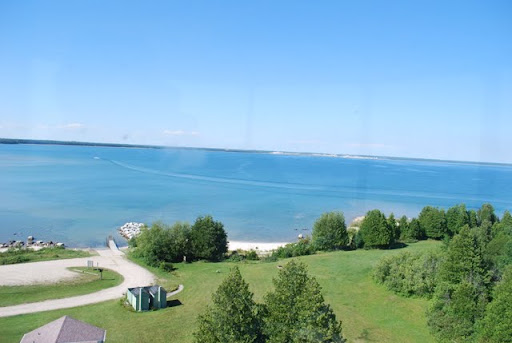
 The tower stands just under 80 feet tall, which afforded a lovely view of the surrounding water!
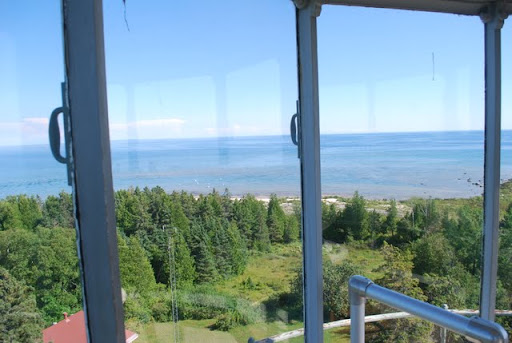 Beautiful, right?
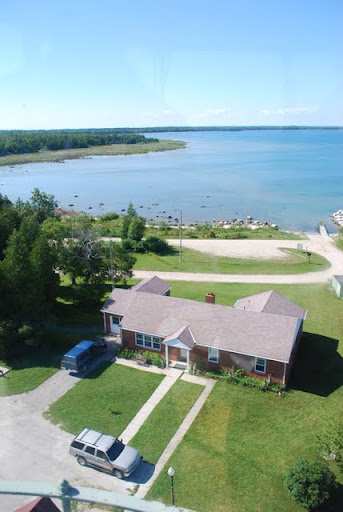 I love visiting lighthouses- and at $3 a person, it's a pretty reasonable tourist attraction!
 Thanks for stopping by- I hope you have a great day!